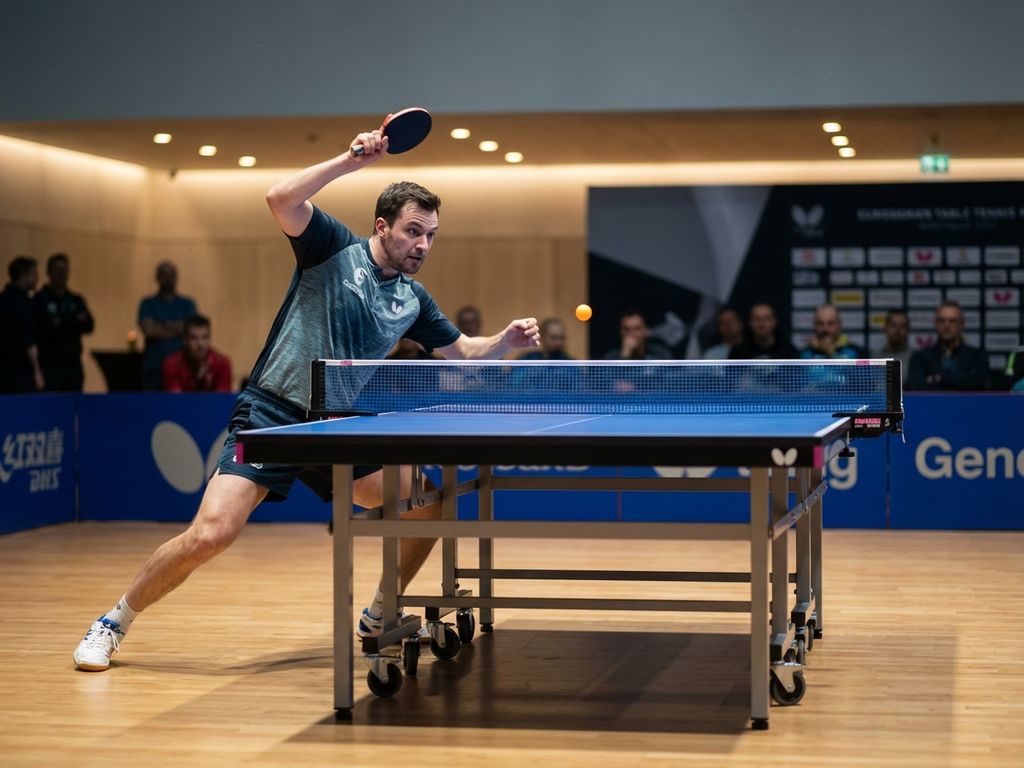
Choose ping pong for tabletop rallies or tennis for full-court play. Both sports trace their roots to racket-and-ball competition, yet they require completely different athletic spaces, physical gear, and match mechanics. Deciding between ping pong vs tennis depends on whether your group wants compact tabletop rallies or wide baseline movement.
At SPIN, we host social table tennis sessions across our clubs, and tabletop rules differ significantly from full-court tennis. While casual parlor play sometimes bends the rules, official gameplay follows clear governing standards. The International Table Tennis Federation (ITTF) defines competitive table tennis, while the United States Tennis Association (USTA) governs American tennis under international court specifications. Reviewing these distinct rulebooks shows exactly what to expect before booking your first table or court.
Contents
- Choose Tabletop Rallies or Full-Court Tennis
- Ping Pong vs Tennis Side by Side
- The Serve and Bounce Rules Differ in Ping Pong vs Tennis
- Games and Sets Use Different Scores
- Doubles Changes More Than the Player Count
- Pick a Table or Court for a First Ping Pong vs Tennis Session
- Who Should Choose Another Setting
- What Would Change the Choice
- Our Takeaway
- Frequently Asked Questions
Choose Tabletop Rallies or Full-Court Tennis
Choosing between ping pong and tennis comes down to whether your outing requires a compact tabletop setup or a full-size tennis court. Table tennis takes place on an elevated table surface measuring 2.74 meters long by 1.525 meters wide, standing 76 centimeters above the floor. Tennis requires a flat court 78 feet long, with a width of 27 feet for singles and 36 feet for doubles.
Tennis players cover the court surface between the baselines and sidelines. Table tennis confines ball movement to a tabletop divided by a 15.25-centimeter net.
Venue availability also dictates your session choice. An indoor group outing may favor a social ping-pong table, while full-court play favors tennis. At SPIN social clubs, staff keep ball baskets stocked so table play is uninterrupted.
Neither sport is universally simpler for beginners to pick up. Selecting the right match starts with matching the setting to your group's social goals and physical preferences.
Ping Pong vs Tennis Side by Side
Official specifications from the ITTF and USTA show substantial differences in playing area, equipment weight, net height, and ball construction. Table tennis uses a spherical ball made of plastic material, measuring 40 millimeters in diameter and weighing exactly 2.7 grams. Tennis is played with a tennis ball across one of many court surfaces.
Tennis rackets use a stringed frame to hit the ball. Table tennis paddles use rigid blades made of at least 85 percent natural wood by thickness, covered with ordinary pimpled rubber under 2.05 millimeters or sandwich rubber under 4.05 millimeters including adhesive.
Net dimensions create distinct physical boundaries across the two sports. In tennis, the net post stands 3.5 feet (1.07 meters) high outside the court lines, with a center strap pulling the net down to 3 feet (0.914 meters) at the middle. In table tennis, the net assembly suspends the net 15.25 centimeters (6 inches) above the tabletop, extending 15.25 centimeters beyond each sideline.
Playing surface dimensions do not equal total required venue space. These official specifications define playing-surface dimensions rather than full venue clearance requirements; see the USTA Friend at Court handbook for complete court regulations.
| Factor | Ping Pong (Table Tennis) | Tennis |
|---|---|---|
| Playing Surface Dimensions | 2.74 m (9 ft) long by 1.525 m (5 ft) wide; 76 cm off floor | 78 ft (23.77 m) long; 27 ft wide (singles) or 36 ft wide (doubles) |
| Net Height | 15.25 cm (6 in) across the entire table width | 3.5 ft (1.07 m) at posts; 3.0 ft (0.914 m) held by center strap |
| Ball Specifications | 40 mm plastic ball weighing 2.7 g in white or orange | Tennis ball |
| Racket Construction | Rigid blade (at least 85% natural wood) with rubber sheets | Strung racket |
| Standard Game Target | First to 11 points, must win by a 2-point margin | Games within sets using love, 15, 30, 40, and deuce |
| Serve Mechanics | Open-palm upward toss of at least 16 cm; bounces on both sides | Hit diagonally into service box; two attempts |
| Doubles Striking Order | Strict alternate hitting between all four players | Either partner can return shots after the serve return |
The Serve and Bounce Rules Differ in Ping Pong vs Tennis
Serving rules in table tennis require the ball to bounce on both sides of the table, whereas tennis serves must clear the net directly into the opponent's service box. Under ITTF rule 2.6, a legal table tennis serve begins with the ball resting motionless on the open, flat palm of the stationary free hand. The server tosses the ball upward at least 16 centimeters (6 inches) without spin, striking it as it falls.
The served table tennis ball must bounce first on the server's side and then directly on the receiver's side. From the start of service until it is struck, the ball must stay above table level and behind the server's end line. Hiding the ball with the body, arms, or clothing forfeits the point directly to the receiver. If the ball clips the net assembly and lands legally, the umpire calls a let and the point is replayed without penalty, as outlined in the official ping pong rules for serving and scoring.
Tennis serving follows a different procedure under USTA tennis serving rules. A tennis server stands behind the baseline between the center mark and sideline, hitting the ball diagonally into the opponent's service box. The ball must never bounce on the server's side of the net. Servers receive two attempts per point; missing the first serve results in a fault, while missing the second serve results in a double fault that awards the point to the receiver.
Bounce rules during active rallies also separate the two sports. In table tennis, hitting the ball out of the air before it bounces on your side of the table is an obstruction fault under rule 2.5.8, awarding the point to your opponent. In tennis, players can hit volleys out of the air at any point during a rally once the serve has bounced. Tennis allows a maximum of one bounce before returning the ball, whereas table tennis players must let every incoming shot bounce once on their tabletop.
Games and Sets Use Different Scores
Table tennis matches use direct numerical scoring to 11 points, while tennis matches track points through traditional calls of love, 15, 30, 40, and deuce. Under modern table tennis rules, the first player or doubles pair to reach 11 points with a two-point margin wins the game. Service alternates every two points during regular play, switching to single alternating serves if the score ties at 10-10.
Tennis games use an incremental points ladder detailed in the USTA scoring standards. Zero points is called love, one point is 15, two points is 30, and three points is 40. When both competitors reach 40-40, the score is called deuce. A player must then win two consecutive points, designated as Ad-In (advantage server) or Ad-Out (advantage receiver), to secure the game.
Structure across an entire match reveals another layer of contrast. Table tennis matches consist of the best of an odd number of games, such as best-of-five or best-of-seven in tournaments, or best-of-three for casual outings. If an individual game lasts 10 minutes without reaching 18 total points, the ITTF expedite system activates, requiring single-point serve rotations and awarding points to the receiver after 13 successful returns.
Tennis matches group games into sets, where a player must win six games with a two-game advantage. In a standard tiebreak set, if the score reaches 6-6, a 7-point tiebreak game is played where winning seven points by two wins the set 7-6. Standard tennis play includes tiebreak and advantage sets alongside approved alternative formats, rather than every match using a single system.
Doubles Changes More Than the Player Count
Table tennis doubles mandates alternating shots between teammates, while tennis doubles allows either partner to hit the ball after the initial return. Under ITTF rule 2.8.2, doubles partners normally alternate strokes. The server strikes the ball, the receiver returns it, the server's partner plays the third shot, and the receiver's partner plays the fourth shot. Hitting out of sequence immediately surrenders the point.
Serving in ping pong doubles introduces geometric constraints. Every serve must bounce in the server's right half-court and then land in the receiver's right half-court. The 3-millimeter white line running down the center of the table marks these half-courts. After every two points, the previous receiver becomes the new server, and the partner of the previous server becomes the new receiver, forcing continuous partner movement around the table corners.
Tennis doubles functions with greater positional flexibility under official USTA doubles guidelines. Four players share the full 36-foot court width. One player serves the entire game, while receivers hold designated ad or deuce court positions for the duration of the set. Once the designated receiver returns the serve, either partner may hit subsequent shots.
This mechanical divergence changes group event dynamics. Table tennis doubles normally requires partners to alternate strokes, so each partner needs room to reach the next shot. For groups larger than four people, playing continuous doubles at a single table is impossible. Event planners must organize structured rotations, tournament brackets to keep everyone involved.
Pick a Table or Court for a First Ping Pong vs Tennis Session
Selecting between a table tennis lounge, a dedicated training club, or a tennis court depends on your group size and session goals. Social ping pong venues provide an indoor setting where casual players can enjoy games with equipment provided on site. At SPIN clubs in cities like Boston, Chicago, New York, Philadelphia, San Francisco, Seattle, and Toronto, tables come equipped with Stiga paddles, balls, and ball baskets. Players can also upgrade to Stiga Pro Carbon paddles at the front desk.
Social clubs pair active play with dining and hospitality. Scratch kitchens prepare shareable snacks, avoids-gluten selections, vegan plates, and craft cocktails, creating an energetic environment for casual groups. Event planners coordinating corporate department outings can reserve SPIN group events and social play to access dedicated tables, private event spaces, and custom tournament programming. Advance bookings open 3 days ahead for weekdays and 7 days ahead for weekend sessions.
Specialized table tennis training academies serve a different reader need. Players seeking structured coaching and focused practice should seek a dedicated training club. Social lounges focus on communal gaming, lively music, and group hospitality rather than silent technical instruction.
Tennis courts suit players seeking a full-court singles or doubles session. Playing tennis requires access to a tennis court, strung rackets, and tennis balls. Tennis uses a 78-foot court and is limited to two or four active players.
| Outing Goal | Recommended Choice | Deciding Factor |
|---|---|---|
| Casual Group Social or Corporate Mixer | Social Ping Pong Table | Indoor table play, on-site paddles, food service, and group game rotations |
| Full-Court Play | Tennis Court | Expansive 78-foot court movement for singles or doubles play |
| Specialized Training | Table Tennis Training Academy | Structured coaching and focused practice for players wanting technical training |
| Large Party with Non-Playing Guests | Social Ping Pong Lounge | Guests can alternate between casual tabletop games, restaurant seating, and side activities |
Who Should Choose Another Setting
Certain outing formats and competitive goals require choosing a specialized facility rather than a social table lounge or a standard tennis court. A group seeking a quiet, seated formal dinner with business speeches should book a private restaurant dining room rather than a table tennis club. SPIN venues center on ping pong play, with guests moving between games and shareable plates, making a restaurant private dining room the better choice for a seated meal with speeches.
Serious table tennis competitors preparing for sanctioned regional tournaments will also prefer dedicated training centers.
Tennis courts are designed for two or four active players. Because tennis courts accommodate two or four active players at a time, larger gatherings must plan player rotations or reserve multiple courts rather than having everyone on court at once.
What Would Change the Choice
Several practical conditions can flip a recommendation between table tennis and full-court tennis for an upcoming session. Court access and venue availability shape the decision. An indoor group outing may favor a social ping-pong table, while dedicated court time favors tennis.
Equipment ownership also influences the decision. If your participants already own strung tennis racquets and have experience rallying across a full court, booking a tennis court capitalizes on existing gear. If your group includes casual participants who do not own equipment, SPIN provides paddles and balls on site.
Group size and session objectives create the final boundary. If the gathering focuses on a full-court session for two to four friends, tennis delivers court play. If the gathering involves eight or ten colleagues who want to drink, eat, and chat between quick games to 11, booking a ping pong table provides a social tabletop setting with food and drinks.
Our Takeaway
Someone seeking a full-court singles or doubles session should choose tennis; someone seeking structured table-tennis coaching may prefer a training club to a nightlife venue. For casual group gatherings where players want shareable food, craft drinks, and easy game rotations, booking an indoor table at a social club provides an event setting with food, drinks, and table play. Choose your venue to reserve a table at SPIN, or contact a local tennis facility to book a court.
Frequently Asked Questions
Is ping pong harder than tennis?
Neither sport is universally harder than the other, and players should choose the format that fits their outing rather than assuming one is easier. Tennis involves full-court play across a 78-foot surface with games within sets. Table tennis involves tabletop rallies on a 2.74-meter surface with games normally to 11. Published rules do not provide a universal difficulty score, so the choice depends on whether you prefer tabletop or court play.
Is ping pong the same as tennis?
Ping pong is not the same sport as tennis, though both belong to the racket-sport family. While table tennis originated as an indoor adaptation of lawn tennis, the two sports evolved into distinct games with separate rules, equipment, and governing bodies. To explore the historic terminology and naming evolution between the parlor game and Olympic table tennis, read why ping pong and table tennis share a sport.
Do ping pong and tennis have the same rules?
Ping pong and tennis follow entirely different rulebooks for serving, scoring, and court play. In table tennis, legal serves must bounce on both sides of the table, volleys out of the air are prohibited, games are played to 11 points, and doubles partners must alternate shots. In tennis, serves must land directly in the diagonal service box without touching the server's side, volleys out of the air are allowed during rallies, scoring follows love-15-30-40 within sets, and either doubles teammate can return shots after the serve.