Holiday activities and holiday experiences are not the same thing. An activity is something you do, while an experience is something you feel — it involves connection, shared emotion, and a sense of occasion that stays with you long after the day is over. For families especially, this distinction matters because the goal of a holiday outing is rarely just to fill time; it is to create something worth remembering together.
The difference often comes down to context and social depth. A standalone activity can be enjoyable in the moment, but an experience wraps that activity inside atmosphere, interaction, and meaning. The sections below unpack each of these questions in detail so you can plan your next family outing with that distinction in mind.
Why do holiday experiences create stronger memories than activities?
Holiday experiences create stronger memories than activities because they engage multiple senses, involve other people, and carry emotional weight. Memory research consistently shows that events tied to emotion, novelty, and social bonding are encoded more deeply in the brain than routine or passive moments. When something surprises, delights, or connects you to others, it sticks.
Think about the difference between watching a film at home and watching it at a live venue where the crowd reacts together. Both involve the same content, but the shared energy transforms the event into a story you retell. The same principle applies to holiday entertainment. When families laugh together over a missed shot, cheer each other on, or discover a shared competitive streak, those emotional peaks become the anchors of the memory.
Experiences also tend to involve a degree of active participation. Passive consumption fades quickly; doing something with your hands and body, especially alongside people you care about, creates a richer sensory imprint. That is why family holiday ideas built around play, competition, and togetherness consistently outperform those built around passive entertainment.
Holiday parties at eight SPIN venues
Book your office holiday party
Reserve ping pong, shareable plates and a DJ at your nearest venue, and our party planners handle your event so you can relax.
What counts as a holiday activity versus a holiday experience?
A holiday activity is a defined task or pastime with a clear beginning and end, such as going bowling, visiting a museum, or watching a movie. A holiday experience is a broader, more immersive event that layers multiple elements together, including atmosphere, food, social interaction, and play, to create a sense of occasion rather than just a way to pass time.
The line between the two is not always sharp, but the key markers are:
- Depth of engagement: Activities tend to be single-focus; experiences involve multiple things happening at once
- Social dimension: Experiences are designed to be shared and talked about, not just completed
- Atmosphere: Experiences create a distinct sense of place and energy that sets them apart from everyday life
- Flexibility: Experiences allow guests to move between play, eating, socializing, and spectating rather than following a fixed script
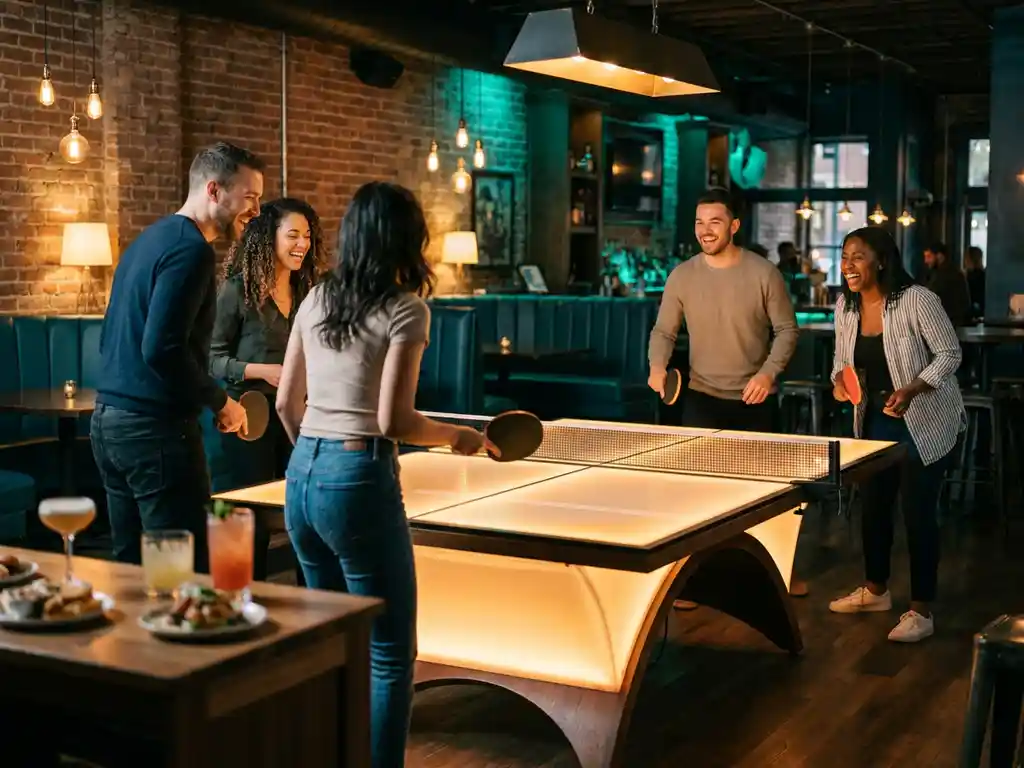
A trip to a ping pong social club, for example, crosses into experience territory because it combines competitive play with food, music, social games, and a vibrant atmosphere. Guests are not just doing one thing; they are inhabiting a world built around connection and fun.
How does social interaction change a holiday outing?
Social interaction transforms a holiday outing from a solo or parallel activity into a genuinely shared event. When people play together, cheer each other on, compete, or collaborate, they build micro-moments of connection that accumulate into a meaningful shared narrative. The outing stops being something you attended and becomes something you experienced together.
This shift matters most for family groups, where different ages and personalities can make it hard to find common ground. A well-designed social environment removes that friction by giving everyone a role. One person plays, another cheers, a third grabs snacks, and someone else challenges the winner. The activity becomes a vehicle for interaction rather than an end in itself.
Social interaction also raises the emotional stakes in a positive way. A friendly rally between a parent and child carries more weight than either person playing alone, because the outcome is shared. That shared stake is what turns a fun afternoon into a holiday memory worth talking about at dinner for months afterward. Family outing ideas that build in natural opportunities for this kind of interaction consistently deliver more satisfaction than those that keep participants isolated in their own lanes.
What makes a holiday experience suitable for all ages?
A holiday experience is suitable for all ages when it offers multiple entry points, adjustable levels of challenge, and activities that do not require a shared skill set to enjoy together. The best family holiday experiences are designed so that a six-year-old and a sixty-year-old can both find something that excites them without one person feeling left out or held back.
Key features of an all-ages holiday experience include:
- Scalable play: Games and activities where beginners and experienced players can compete without frustration on either side
- Multiple activity options: A mix of active play, social games, and relaxed seating so energy levels and preferences are all accommodated
- Food that works for everyone: Shareable, snackable menus that satisfy kids and adults alike without requiring separate orders
- Safe, welcoming atmosphere: Spaces that feel inclusive and comfortable for children during daytime hours without feeling childish to adults
- No prior skill required: Environments where first-timers are welcomed, coached if needed, and never made to feel out of place
Ping pong is a strong example of an all-ages activity because the barrier to entry is genuinely low. You do not need athletic training to enjoy a rally, and the game scales naturally from casual to competitive. When that play is set inside a venue with great food, art, and atmosphere, the experience works for every generation at the table.
When should families choose an experience over a simple activity?
Families should choose an experience over a simple activity when the goal is connection rather than just entertainment. If the priority is simply filling an hour, an activity is fine. But when the outing is meant to mark a special occasion, bring different generations together, or create something genuinely memorable, an experience is the better investment of time and energy.
Specific situations where experiences outperform activities include:
- Birthday celebrations: A party built around play, food, and atmosphere creates a story; a standard activity booking creates a slot on the calendar
- Holiday outings during school breaks: When families have more time together, experiences make that time feel intentional and special rather than routine
- Mixed-age groups: When grandparents, parents, and children are all present, an experience with multiple touchpoints ensures everyone is engaged
- When screen fatigue is real: Experiences that involve physical play and face-to-face interaction offer a genuine break from passive entertainment
- When you want something to talk about afterward: The best test of an experience is whether it generates conversation on the drive home
The holiday season in particular is a time when families feel the pressure to make outings count. Choosing an experience over a simple activity is the most reliable way to ensure the day delivers something beyond a way to pass the time.
How SPIN turns holiday entertainment into a full family experience
At SPIN, we have built our venues around exactly this distinction between doing something and experiencing something. Here is what makes a visit to SPIN a genuine family holiday experience rather than just another outing:
- Olympic-grade ping pong tables with premium STIGA equipment, suitable for complete beginners and seasoned players alike
- On-site SPIN pros who engage with guests, offer tips, and keep the energy fun and welcoming for all skill levels
- Large-format social games like Uno, Connect 4, and Jenga for guests who want to mix things up between rallies
- Chef-driven shareable menus and seasonally inspired drinks that keep everyone fueled and happy
- Private party packages ideal for birthday celebrations and family milestones, with dedicated event planners to handle the details
- Family-friendly daytime hours across locations in New York, Chicago, Boston, Philadelphia, and more
Whether you are planning a weekend outing or a full birthday celebration, our table reservations make it easy to secure your spot online up to seven days in advance for weekends. Walk-ins are also welcome when space is available. Come for the ping pong, stay for everything else — and leave with a story worth telling.