The fastest way to make a corporate holiday party feel less formal is to replace passive activities with interactive ones. When people are doing something together, whether that is playing a game, competing in a friendly match, or sharing a plate of food, the conversation starts naturally and the stiffness fades. The venue you choose, the activities you offer, and the structure of the evening all play a role. The sections below walk through the most common questions event planners ask when planning a corporate holiday party that people will actually enjoy.
What activities actually get coworkers talking to each other?
Activities that require light, low-stakes participation get coworkers talking because they give people something to focus on other than each other. Games like ping pong, shuffleboard, or giant Jenga create natural moments of encouragement, friendly trash talk, and shared laughter. These interactions are the building blocks of real conversation, without anyone having to force it.
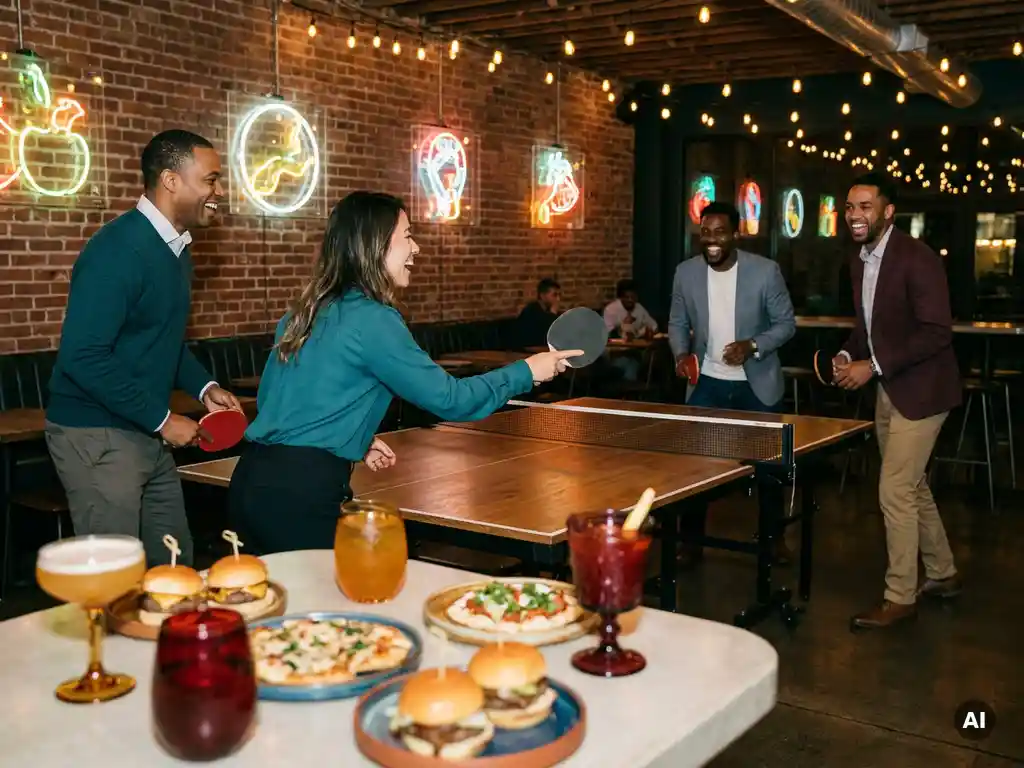
The key is choosing activities that are easy to pick up but still engaging enough to hold attention. Ping pong works particularly well in a corporate setting because it accommodates all skill levels, pairs people together naturally, and rotates quickly enough that everyone gets involved. You do not need to be athletic or competitive to enjoy a rally with a colleague you rarely speak to in the office.
Large-format games like Connect 4, Uno, and Jenga also help because they work for groups who want to participate without being the center of attention. Mixing competitive options with social ones means introverts and extroverts alike can find their comfort zone.
How does venue choice affect the formality of a corporate event?
The venue sets the tone before a single word is spoken. A hotel ballroom with round tables and a podium signals formality. A venue built around play, with open floor plans, bar seating, game tables, and ambient music, signals that the night is meant to be enjoyed. The physical environment shapes how people carry themselves and how willing they are to relax.
Lighting, layout, and sound all contribute to perceived formality. Bright overhead lighting and rows of chairs feel like a conference. Warm lighting, communal seating, and a DJ feel like a party. When the space itself encourages movement and mingling, guests naturally spread out, mix with different colleagues, and stay longer.
Choosing a venue that has built-in entertainment removes the pressure of programming every moment of the evening. When there are ping pong tables to play on, a bar to gather around, and music setting the energy, the event has momentum without requiring constant facilitation from the organizer.
What's the difference between a team-building event and a holiday party?
A team-building event is structured around a specific goal, such as improving communication, solving a problem together, or learning something new. A holiday party is primarily social, focused on celebrating the year and giving employees a chance to enjoy each other's company outside of work. The two are not mutually exclusive, but confusing them can lead to an event that feels like neither.
The most successful corporate holiday parties borrow elements from team building without being prescriptive about it. Friendly competition over a ping pong table builds camaraderie organically. Shared food and drinks open conversations. A relaxed, festive atmosphere does the work that a structured exercise would try to manufacture.
If your goal is to strengthen team cohesion, you do not need to schedule icebreaker exercises into your holiday party. Choose an environment and activities that naturally bring people together, and let the bonding happen on its own terms. The result tends to feel more genuine, and employees appreciate not being put on the spot.
How do you plan a corporate holiday party that appeals to everyone?
Planning a corporate holiday party that appeals to everyone means offering variety rather than a single format. Not everyone wants to compete, not everyone drinks alcohol, and not everyone is comfortable in large crowds. Building in options across all of those dimensions ensures that every employee can find a way to participate comfortably.
- Offer activity choices: Mix competitive games with casual ones so guests can self-select based on their comfort level.
- Include non-alcoholic options: A beverage menu with spirit-free cocktails and other alternatives means no one feels excluded at the bar.
- Design the space for different group sizes: Communal seating for large groups and quieter corners for smaller conversations accommodate different social styles.
- Keep it voluntary: Avoid mandatory participation in any single activity. When people choose to join in, the energy is always better.
- Time it thoughtfully: Evening events with a clear end time respect people's personal schedules and tend to have better attendance than open-ended gatherings.
Inclusivity also extends to physical accessibility. Venues with open floor plans and a range of seating options make it easier for all employees to move through the space and feel welcome throughout the night.
Should you have food and drinks at a corporate holiday party?
Yes, food and drinks are essential at a corporate holiday party. They serve a social function beyond nutrition. Gathering around a shared plate of food or ordering a round of drinks together are among the most natural ways people connect. A party without food and beverages feels incomplete and tends to end earlier than intended.
The format matters as much as the menu. Shareable, snackable food that guests can eat while moving between activities keeps the energy flowing. Heavy plated dinners can slow the pace and anchor people to their seats, which works against the informal atmosphere you are trying to create.
A thoughtful beverage menu that includes both alcoholic and non-alcoholic options signals that the event was planned with everyone in mind. Seasonally inspired cocktails, local craft beers, and spirit-free alternatives give guests real choices rather than an afterthought. When the food and drinks are genuinely good, they become a talking point in themselves.
When should you book a venue for a corporate holiday party?
For a corporate holiday party in 2026, you should aim to book your venue by early September at the latest. Popular event venues fill up quickly in the final months of the year, particularly in major cities where competition for Friday and Saturday evening slots is high. Waiting until October or November significantly limits your options and may force compromises on date, space, or package.
Booking early also gives you more time to communicate the event to employees, which tends to improve attendance. When people have the date on their calendar weeks in advance, they plan around it rather than discovering a conflict at the last minute.
If your company requires budget approval before committing to a venue, start that process in the summer. Many venues offer preliminary holds or tentative bookings while approvals are in progress, which protects your preferred date without requiring a full commitment upfront. Asking about this option early can save significant stress later in the planning process.
How SPIN helps make your corporate holiday party feel less formal
We built SPIN specifically to be the kind of place where people loosen up, have fun, and leave feeling connected. For corporate holiday parties, that translates into a venue that does the heavy lifting for you.
- Olympic-grade ping pong tables give every guest something to do, regardless of skill level, creating natural interaction without structured programming.
- Chef-driven menus with shareable, snackable food keep energy high and guests moving throughout the space.
- Full-service bars with craft cocktails, local beers, and spirit-free options mean everyone feels included.
- Rotating DJs set the atmosphere so the event has energy from the moment guests arrive.
- Dedicated event planners handle logistics so you are not coordinating multiple vendors on the night.
- Private event spaces across our locations in New York, Chicago, San Francisco, Toronto, Philadelphia, Seattle, and Boston accommodate groups of all sizes.
- Customizable party packages make it straightforward to plan within your budget.
If you are ready to plan a corporate holiday party that your team will actually look forward to, reach out to our events team to check availability and explore packages for your group.