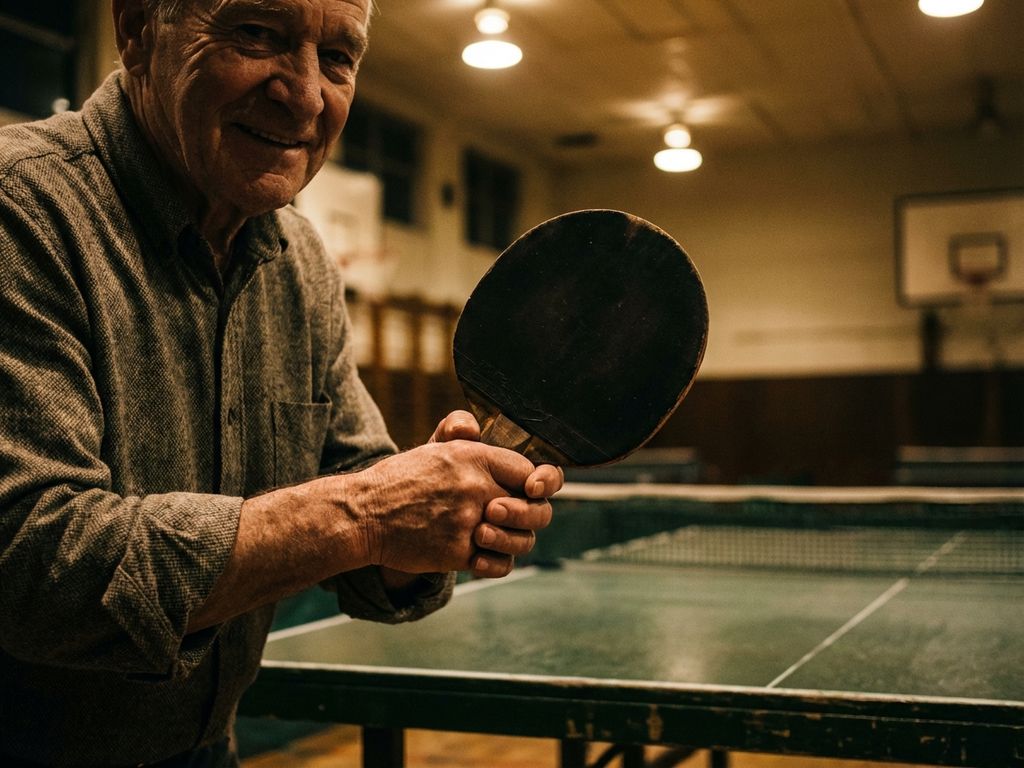
No, Endo from Marty Supreme is not a real person. The character is a fictional competitor created for the 2025 movie directed by Josh Safdie. He is partially inspired by Koto Kawaguchi, the deaf Japanese table tennis player who plays him, and partially by 1952 world champion Hiroji Satoh.
The Two Real People Behind Koto Endo
According to Slate, Endo was not a real person. The Marty Supreme Wikipedia entry and Koto Kawaguchi’s Wikipedia entry report that the character is partially inspired by Kawaguchi and partially by Hiroji Satoh.
| Person | Who He Is | What the Film Takes From Him |
|---|---|---|
| Koto Kawaguchi | Kawaguchi is a Japanese deaf table tennis player and actor born in 1999 who plays professionally for Toyota. | Kawaguchi plays Endo, and Endo is deaf like him. |
| Hiroji Satoh | Satoh was a table tennis player from Aomori, Japan, who won the 1952 world men’s singles championship. | Satoh beat Marty Reisman at the 1952 World Championships while using a paddle with a sponge foam layer. |
The two men played in different eras. Satoh won his world title in 1952, and Kawaguchi was born in 1999.
In the film, Timothée Chalamet stars as Marty Mauser, a character loosely based on New York table tennis player Marty Reisman. Marty Mauser loses the final of a London tournament to Endo.
8 ping pong social clubs · US & Toronto
Bring your group to SPIN
Ping pong tables for up to 10, party packages, and private events with food, drinks and a DJ. Pick your city to book.
Koto Kawaguchi, the Deaf Table Tennis Player Who Plays Endo
Koto Kawaguchi is a Japanese deaf table tennis player and actor who portrays Koto Endo. Kawaguchi was born on September 7, 1999, according to his Wikipedia entry. The Deaflympics athlete profile also lists his birth year as 1999.
He is a working professional athlete. He has played table tennis professionally since 2019, according to i-D. Both i-D and his Wikipedia entry report that he competes for Toyota.
The Deaflympics athlete profile reports that he won men’s team bronze medals at the 2022 Deaflympics in Caxias do Sul and the 2025 Deaflympics in Tokyo.
Marty Supreme was his acting debut. According to i-D and his Wikipedia entry, Kawaguchi had never acted before landing the role. Toyota made an audition video for him.
When he first received the casting offer, Kawaguchi thought it was a scam, as reported by i-D and his Wikipedia entry.
The Marty Supreme Wikipedia entry describes Endo as a deaf table tennis champion representing Japan.
Hiroji Satoh, the 1952 World Champion
Hiroji Satoh is the second real player who partially inspired Endo, according to the Marty Supreme Wikipedia entry. According to Hiroji Satoh’s Wikipedia entry, Satoh was born on February 3, 1925, and died on June 4, 2000. He was an athlete from Aomori, Japan.
Satoh competed at the 1952 World Table Tennis Championships. The tournament took place in Bombay, India, according to the Wikipedia page on the 1952 World Championships men’s singles. Satoh won the men’s singles gold medal at that event, beating József Kóczián three sets to nil in the final.
His Wikipedia entry says that Satoh was the first Japanese player to win a world title of any kind since the beginning of the war. Upon returning to Tokyo, he was greeted by a million people.
Satoh’s path to the title included a match against New York table tennis player Marty Reisman, the model for Marty Mauser. Satoh beat Reisman at the 1952 World Championships, as reported by Marty Reisman’s Wikipedia entry, Slate, and The Ringer. TIME reports that Reisman was defeated by a Japanese player at a world championship.
Sources disagree on which round Satoh and Reisman played in. Readers can learn more about Reisman’s career and background in the life and career of Marty Reisman.
His Wikipedia entry says “Satoh was enabled to win the 1952 gold medal by sponge racquet.” Marty Reisman’s Wikipedia entry calls Satoh one of the first players to use a paddle with a sponge foam layer.
For more on paddle surfaces, read what hardbat table tennis is and why it matters.
The Reality Behind Marty’s Loss to Endo
Marty Reisman never faced Koto Endo. Endo is a fictional character, so their cinematic rivalry never took place in real life. However, Reisman did lose to Hiroji Satoh at the 1952 World Table Tennis Championships.
The movie alters the location of that tournament. In Marty Supreme, Marty travels to London and loses the tournament final to Endo, as described by the Marty Supreme Wikipedia entry. The Ringer refers to that fictional London event as the 1952 British Open.
i-D says Endo “thrashes him at a tournament in London.” TIME reports that the real 1952 tournament was in Mumbai, while the movie shows London. Bombay, where the 1952 championships were held, is now called Mumbai.
The film also shows more matches between Marty and Endo. According to the Marty Supreme Wikipedia entry, Marty loses a staged exhibition to Endo in Tokyo. Later in the film, Marty narrowly wins a rematch against Endo that is not staged.
On screen, Endo beats Marty in London and in a Tokyo exhibition before Marty wins the rematch. In real life, Satoh beat Reisman at the 1952 World Championships in Bombay, then won the title.
Play Ping Pong at SPIN
At SPIN, we are the original ping pong social club, and our flagship opened in New York City about 15 years ago. We operate eight venues across seven cities: Boston, Chicago, Philadelphia, San Francisco, Seattle, Toronto, and two New York locations in Flatiron and Midtown. Every venue centers on ping pong with a full-service restaurant and craft cocktail bar.
Coworkers and friends will enjoy ping pong and great food together with Stiga paddles and unlimited balls. Party planners at each venue handle your event so that you can relax and enjoy. To reserve tables for your group, choose your venue to book your visit.
The Bottom Line on Endo
Koto Endo is a fictional character partially inspired by two real table tennis players. Koto Kawaguchi, who plays Endo, is a working deaf table tennis player for Toyota with men’s team bronze medals from the 2022 and 2025 Deaflympics. Hiroji Satoh was the 1952 world champion who used a sponge paddle and beat Marty Reisman at that tournament.
This answer would change only if the filmmakers named a different real player as the model for Endo. For more of the film’s history, read whether Marty Supreme is based on a true story, or book a table at a SPIN venue.
Frequently Asked Questions
Is Endo from Marty Supreme a real person?
No, Slate reports that Endo was not a real person. He is partially inspired by deaf Japanese table tennis competitor Koto Kawaguchi and partially by 1952 world champion Hiroji Satoh.
Is Koto Kawaguchi deaf?
Yes, Koto Kawaguchi is deaf. His Wikipedia entry describes him as a Japanese deaf table tennis player and actor. According to the Deaflympics athlete profile, he won bronze medals in the men’s team event at the 2022 Deaflympics in Caxias do Sul and the 2025 Deaflympics in Tokyo.
Is Koto Kawaguchi a real ping pong player?
Yes, Koto Kawaguchi is a real professional table tennis player. He has competed professionally since 2019 and plays for Toyota, according to i-D and his Wikipedia entry. Marty Supreme was his acting debut, and Toyota produced his audition video for the film.
Who is Endo in Marty Supreme based on?
Endo is based on two real Japanese table tennis players, Koto Kawaguchi and Hiroji Satoh. Kawaguchi plays Endo, and Endo is deaf like him. Satoh won the 1952 world singles title in Bombay and beat Marty Reisman at that tournament.
Did Marty Supreme really beat Endo?
In the film, Marty Mauser loses the London final and a staged exhibition in Tokyo to Endo, then narrowly wins a rematch. In real life, Marty Reisman never played Endo, because Endo is a fictional character. Hiroji Satoh beat Reisman at the 1952 World Table Tennis Championships.
Who was Hiroji Satoh?
Hiroji Satoh was a table tennis champion from Aomori, Japan, who lived from 1925 to 2000. He won the men’s singles gold medal at the 1952 World Table Tennis Championships using a paddle with a sponge foam layer. Satoh was the first Japanese player to win a world title of any kind since the beginning of the war. According to his Wikipedia entry, he was greeted by a million people on returning to Tokyo.