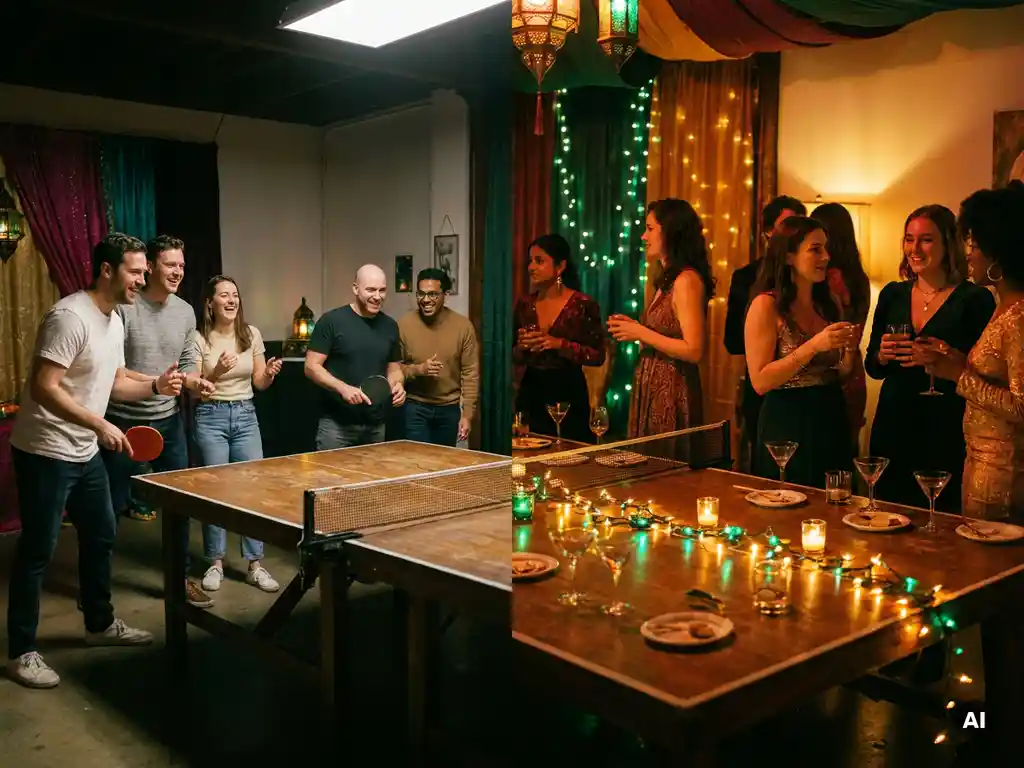
A corporate holiday party and a team retreat are two distinct types of work events with different goals, formats, and outcomes. A holiday party is primarily a celebration designed to reward employees and mark the end of the year, while a team retreat is a structured experience focused on professional development, strategic alignment, or deeper team bonding. Understanding the difference helps you plan the right event for the right moment.
What are the main goals of a corporate holiday party versus a team retreat?
A corporate holiday party is designed to celebrate, reward, and appreciate employees. The primary goal is morale and recognition, giving people a chance to unwind, enjoy each other's company, and feel valued by the organization. A team retreat, on the other hand, is goal-oriented, focused on outcomes like improving collaboration, solving business challenges, or building skills.
Holiday parties tend to be inclusive and low-pressure. They signal gratitude from leadership and create a shared moment of joy across the company. Success is measured by how much people enjoyed themselves and how connected they felt afterward.
Team retreats carry a more deliberate agenda. Whether the goal is to align on a new strategy, rebuild trust across departments, or strengthen communication, there is usually a defined outcome the organizers are working toward. Fun is part of the experience, but it serves the larger purpose of making people more effective together.
How does the format and structure differ between the two?
Holiday parties are typically unstructured social gatherings with food, drinks, music, and optional activities. There is no agenda beyond enjoying the evening. Team retreats follow a structured schedule that may include workshops, facilitated discussions, group challenges, and reflection sessions, with social activities woven in to reinforce the experience.
A holiday party might run for two to four hours on a weekday evening or weekend afternoon. It is designed to be accessible and low-commitment, allowing employees to drop in, mingle, and leave without missing anything critical.
A team retreat, by contrast, often spans a full day or multiple days. The structure is intentional, with activities sequenced to build on each other. Social time is still included, but it is positioned strategically to help people connect in ways that support the retreat's broader objectives.
Which type of event is better for team building?
Team retreats are generally more effective for structured team building because they provide dedicated time, focused activities, and the space for meaningful conversation. However, a well-designed holiday party can also strengthen team bonds by creating shared memories and giving colleagues the chance to connect outside of work roles and hierarchies.
The difference comes down to depth versus breadth. A retreat allows for deeper relationship-building through shared challenges and facilitated reflection. A holiday party reaches a wider audience in a lighter way, lowering barriers for people who might feel uncomfortable in more structured team-building settings.
For teams that rarely socialize, even a casual holiday party can move the needle on connection and belonging. For teams navigating change, conflict, or rapid growth, a retreat with intentional programming will deliver more lasting results. The best employee engagement strategies use both formats throughout the year rather than relying on one alone.
Can a holiday party and a team retreat be combined into one event?
Yes, a holiday party and a team retreat can absolutely be combined into a single event, and many organizations do exactly this. The key is sequencing: run structured team-building activities first while energy is high, then transition into a celebration format so the evening ends on a festive, relaxed note.
This hybrid approach works especially well for smaller companies or teams where the budget supports only one major event per year. By combining formats, you get the bonding depth of a retreat with the celebratory warmth of a holiday party, all in one experience.
The risk is trying to do too much. If the retreat portion feels like mandatory work and the party portion feels rushed, neither goal is fully achieved. The solution is to keep the structured segment focused and time-limited, no more than two to three hours, and give the celebration portion enough breathing room to feel genuinely festive rather than like an afterthought.
Venues that offer interactive activities alongside food, drinks, and a lively atmosphere are ideal for this kind of combined event. A corporate party venue with built-in entertainment removes the need to coordinate separate vendors for each phase of the event.
What should you consider when choosing a venue for each event type?
For a corporate holiday party, prioritize atmosphere, capacity, and convenience. You want a space that feels celebratory and social, with great food and drinks, enough room for guests to move around comfortably, and a location that is easy for employees to reach. The venue itself should do a lot of the heavy lifting in creating the right mood.
For a team retreat, the most important factors are flexibility and function. You need breakout spaces for smaller group conversations, enough room for activities, and a venue that can shift between working sessions and social time without feeling awkward. On-site catering and dedicated event support matter more here because the logistics are more complex.
For a combined event, look for a venue that naturally bridges both worlds: one that offers structured activity options alongside a vibrant social environment. The venue should feel professional enough to support a team-building agenda but energetic enough to carry a celebration. Dedicated event planners on-site are especially valuable when you are managing multiple formats in a single evening.
In all cases, consider inclusivity. The best corporate event venues offer activities that appeal to a wide range of personalities and comfort levels, so no one feels left out regardless of whether they are competitive, casual, introverted, or extroverted.
How SPIN helps with your corporate holiday party or team retreat
Whether you are planning a standalone holiday party, a focused team retreat, or a combination of both, SPIN provides everything you need under one roof. Here is what we bring to your corporate event:
- Olympic-grade ping pong tables that work equally well as structured team-building activities or casual social entertainment
- Dedicated event planners who help you design the right format for your goals, group size, and budget
- Chef-driven menus and full-service bars with locally sourced food, craft cocktails, and spirit-free options for every preference
- Private event spaces across our venues in New York, Chicago, San Francisco, Toronto, Philadelphia, Seattle, and Boston, ranging from 10,000 to 18,000 square feet
- Rotating DJs and a vibrant atmosphere that transitions seamlessly from team-building energy to full celebration mode
- Customizable packages for groups of all sizes, from intimate team gatherings to large-scale company events
Ready to start planning? Explore our event packages and connect with our team to find the format that fits your next corporate event.