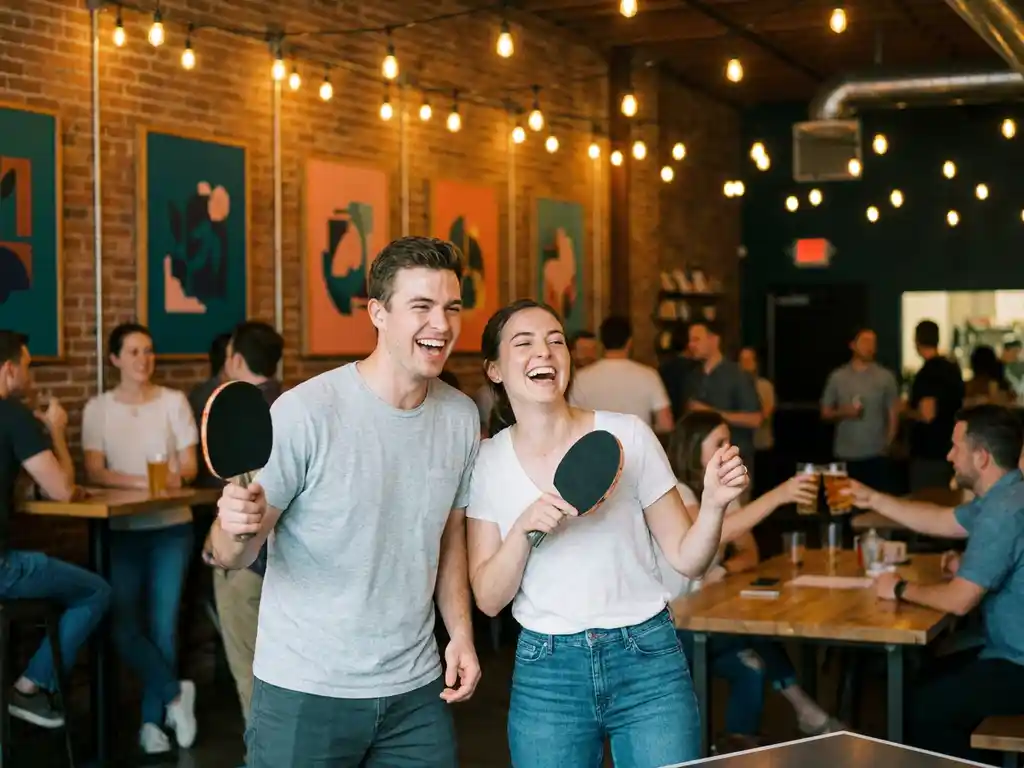
Yes, holiday activities can genuinely strengthen relationships between siblings. Shared experiences outside of everyday routines create new memories, reduce friction, and give brothers and sisters a chance to connect on neutral ground where no one has the home-field advantage. The key is choosing activities that invite participation from everyone, regardless of age or personality. Below, we unpack the questions families ask most when planning sibling bonding time during the holidays.
What types of activities actually bring siblings closer together?
Activities that bring siblings closer together share one quality: they require interaction rather than passive consumption. Side-by-side screen time rarely builds bonds, but activities that involve turn-taking, light competition, or a shared goal create the kind of moments siblings talk about years later. The best sibling bonding activities balance enough structure to keep things fun with enough flexibility for everyone to participate at their own level.
In practice, this means looking for activities with a low barrier to entry but a high ceiling for engagement. Games with simple rules that still reward skill, creative challenges where everyone contributes, and physical activities with natural breaks all tend to work well across different ages and temperaments. Some strong options include:
- Table sports like ping pong, where rallies are naturally collaborative even in a competitive format
- Large-format social games such as Uno, Connect 4, and Jenga that mix strategy with luck so younger kids can genuinely compete
- Cooking or baking together, which gives everyone a role and ends with a shared reward
- Outdoor scavenger hunts that encourage teamwork and communication
- Creative projects like building, crafting, or decorating that allow individual expression within a shared activity
The common thread is that these activities create conversation, laughter, and small shared victories. Those moments are the raw material of a stronger sibling relationship.
Why do holidays create stronger bonding opportunities for siblings?
Holidays create stronger bonding opportunities for siblings because they remove the usual structure of daily life. School schedules, homework, separate friend groups, and after-school commitments keep siblings operating in parallel rather than together. During holidays, that separation dissolves, and families have extended, unscheduled time that can be filled with intentional shared experiences.
There is also an emotional dimension. Holidays carry a sense of occasion that makes experiences feel more significant. An afternoon of ping pong on a random Tuesday is fun, but the same afternoon during a school break feels like an event. That heightened sense of occasion makes siblings more present, more willing to engage, and more likely to carry the memory forward.
Holiday periods also tend to reduce the competitive pressures siblings feel at home. When the context shifts from who got better grades or who has more friends to who can win a rally or who can stack Jenga blocks the highest, siblings meet each other on more equal terms. That leveling effect is one of the most underrated benefits of family holiday activities.
How does friendly competition help siblings build a better relationship?
Friendly competition helps siblings build a better relationship by giving them a structured, low-stakes arena to practice navigating conflict, handling winning and losing, and cheering each other on. When competition is genuinely friendly, it teaches siblings how to push each other without damaging the relationship, which is a skill that carries well beyond childhood.
The critical word is friendly. Competition that feels fair and fun reinforces the bond; competition that feels humiliating or one-sided does the opposite. This is why the format of the activity matters as much as the activity itself. Games where the outcome can shift quickly, where a younger sibling can get lucky, or where teams can be mixed up to balance skill levels keep competition productive rather than divisive.
Ping pong is a particularly good example of friendly competition done well. A single rally requires both players to cooperate just to keep the ball in play, which means even a competitive match has built-in moments of collaboration. Siblings who play together regularly often find that the game becomes a private language, a reference point for their relationship that belongs entirely to them.
What activities work when siblings have a big age gap?
When siblings have a big age gap, the best activities are ones with adjustable difficulty, turn-based formats, or team structures that pair older and younger siblings rather than pit them against each other. The goal is to find a shared activity where the age difference becomes an asset rather than a barrier, with older siblings naturally stepping into a mentoring role without it feeling forced.
Large-format social games like Connect 4, Jenga, and Uno work particularly well across age gaps because the rules are simple enough for young children to follow but engaging enough to hold a teenager's attention. Ping pong is another strong option because an older sibling can adjust their play style to keep rallies going, which gives younger siblings a genuine sense of accomplishment without the older one feeling bored.
Team formats are often the most effective solution for big age gaps. Pairing an older sibling with a younger one against parents, or mixing ages across teams, shifts the dynamic from competition between siblings to collaboration between them. That shift can be transformative, especially for siblings who do not naturally spend much time together due to their different life stages.
A few practical activity ideas for mixed-age sibling groups include:
- Doubles ping pong, where an older and younger sibling share a side
- Team trivia with categories that span different knowledge levels
- Bowling, where handicap scoring keeps everyone competitive
- Collaborative art or building projects where each person contributes differently
- Escape rooms designed for families, which require diverse thinking styles
How can parents make holiday outings feel special for every sibling?
Parents can make holiday outings feel special for every sibling by choosing venues and activities that offer something genuinely engaging for each child, not just the oldest or the most outgoing. The key is avoiding activities where one sibling is clearly the star and the others are spectators. When every child has a role, a turn, or a moment to shine, the outing feels inclusive rather than obligatory.
Practical strategies that help include:
- Letting each sibling choose one element of the outing, whether that is the snack, the first game, or the activity order
- Acknowledging individual moments out loud, such as praising a younger child's first successful rally or an older sibling's patience in teaching
- Building in downtime between structured activities so siblings can interact naturally without pressure
- Choosing venues with variety so that a child who tires of one activity can move to another without disrupting the group
- Framing the day as a shared adventure rather than a series of individual turns, which encourages siblings to invest in each other's enjoyment
Food also plays a bigger role than parents often expect. Shareable, snackable menus where everyone can graze and try different things keep energy levels up and give siblings something to bond over between activities. A venue that combines activity with a genuinely good food and drink experience removes the need to split the outing across multiple stops, which keeps the energy cohesive and the family together longer.
How SPIN helps siblings bond during the holidays
At SPIN, we have built an environment specifically designed for the kind of shared, joyful play that brings siblings closer together. Whether you are planning a holiday outing for young kids, teenagers, or a mixed-age group, our venues offer everything families need in one place:
- Olympic-grade ping pong tables with premium Stiga equipment, suitable for all skill levels from first-timers to competitive players
- Large-format social games including Uno, Connect 4, and Jenga, perfect for siblings of different ages and interests
- On-site SPIN pros who can offer tips, join a game, or help younger players feel confident at the table
- A chef-driven menu of shareable, snackable bites that keep everyone fueled and happy between games
- Private party packages ideal for birthday celebrations and family milestones, with dedicated event planners to handle the details
- Family-friendly daytime hours across all our locations in New York, Chicago, Boston, Philadelphia, San Francisco, Seattle, Washington, DC, and Toronto
Our ping pong table reservations can be made online up to seven days in advance for weekends, so you can lock in a time that works for the whole family. Walk-ins are also welcome when space is available. This holiday season, give your kids the gift of a memory they will actually want to revisit. Book your family outing at SPIN and let the rallies, the laughter, and the friendly competition do the rest.